
Choosing the Right Composite Form

Carbon Fiber Material – Choosing the Right Form

Choosing the Right Composite Form

Start from the problem in front of you, not from a catalogue heading. If your laminate is building thicker than the design allows or curing with resin-rich pockets, the dry carbon fiber fabric route is usually the right first stop, because a spread tow construction is described as easier to impregnate and less prone to resin accumulation. If the line is already set up and you need a finished input rather than a new process, the same page puts dry fabric, tape and pitch-based forms side by side so you can match the carbon fiber material to your press, your lay-up head and your ply count — then confirm the exact grade, areal weight and tow width with our team.

7 fiber grades T300, T700, T800, M30, M40
Plain · Twill · Satin Weave structures listed per model
Custom on request Structure and specification
Carbon Fiber Spread Tow Fabric

Side-by-Side: What Each Form Changes in Your Process

The table answers one question only — which step of your process the material moves.

Family Supply form Resin already in it? Step it changes in your process
Spread tow fabric Dry woven fabric, 1000 mm standard width No You impregnate on your own line; the spread construction is described as easy to impregnate and to lay.
UD prepreg Unidirectional tape Yes Skips impregnation — lay up and cure the tape you receive.
Pitch-based tow Continuous long-fiber tow No Feeds a tow-based process or an intermediate conversion step.
Chopped fiber / powder Short fiber and powder No Moves the part out of lamination and into compounding or moulding.

Fabric specifications for this page's product are listed in full below. Data for the other three families is published on their own product pages — check there before you commit to a grade.

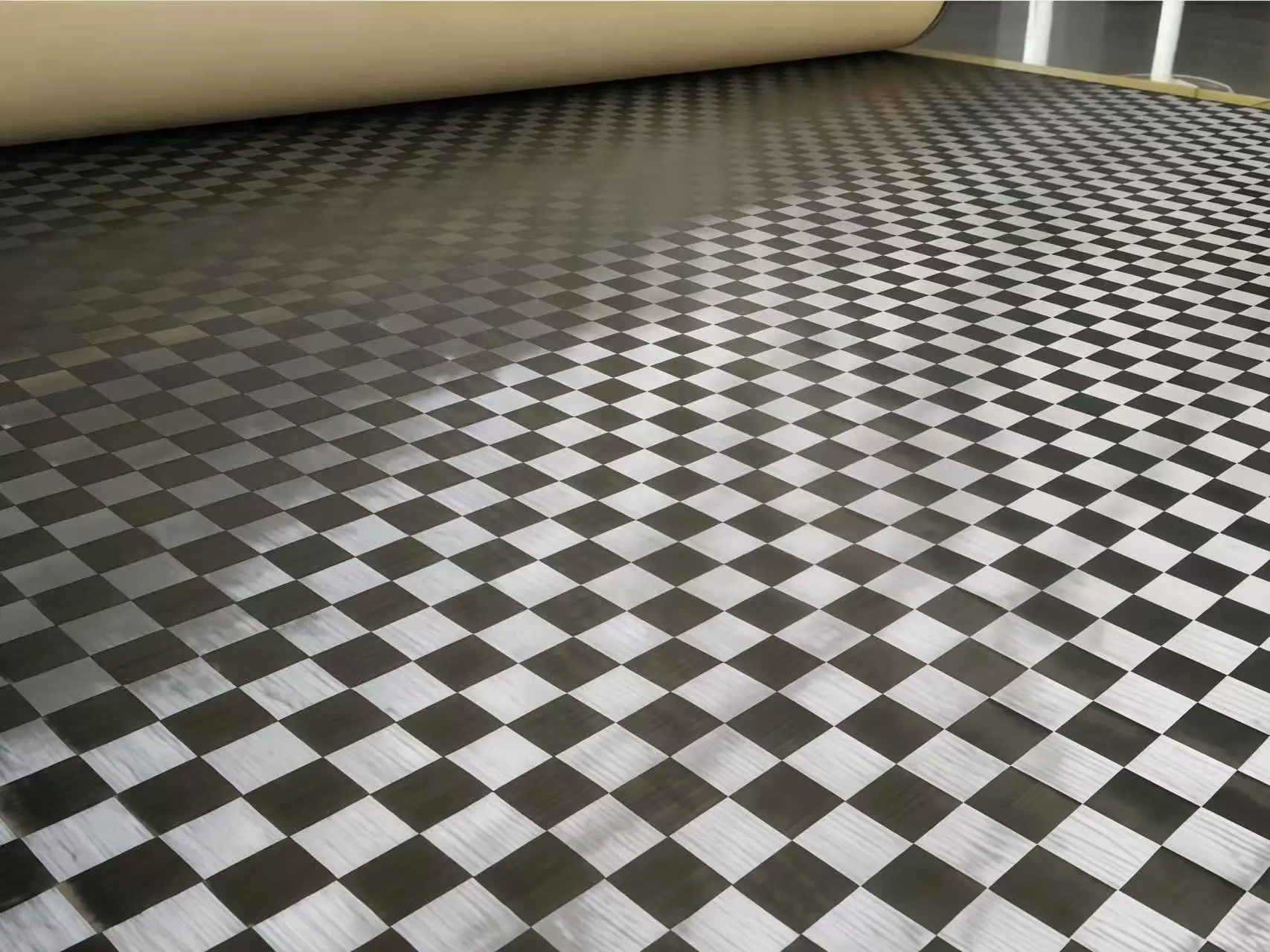
Carbon Fiber Spread Tow Fabric roll

Spread Tow Fabric: What This Family Delivers

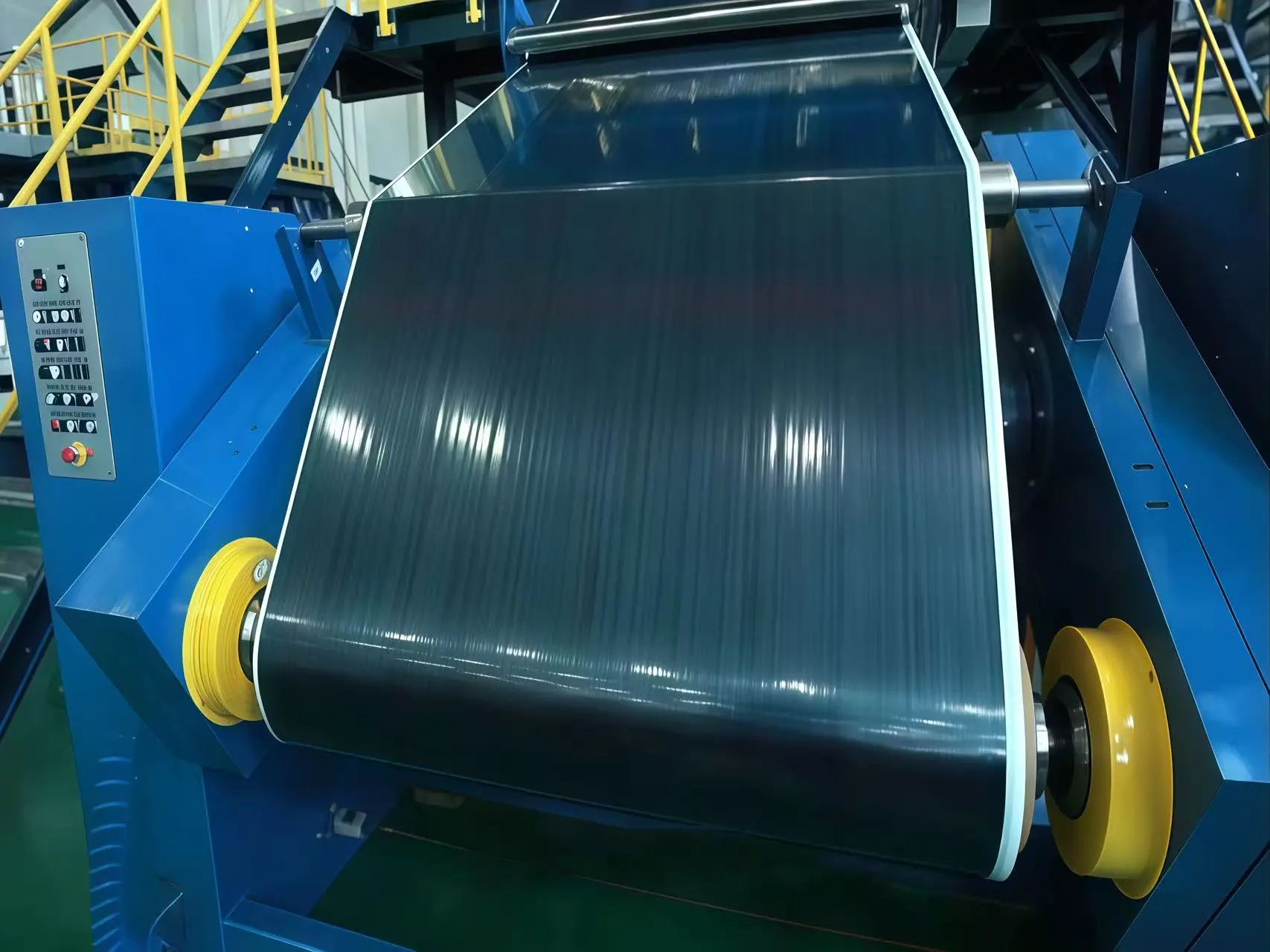
Spread tow changes what a woven ply can do. The tow is spread into a flat tape before weaving, so the fabric carries excellent fiber alignment and far fewer warp–weft interlacing points than a conventional woven carbon. In prepreg processing that flattens the crimp: the product page describes reduced resin accumulation and porosity, enabling easy impregnation and laying, with composites that show superior interface performance and high mechanical properties.

Because the plies arrive thinner and flatter, the same design also buys flexibility for the finished part — fewer plies to stack, more room to tune the lay-up. Every fabric listed is supplied at a standard 1000 mm width, and the structure and other specific specifications can be customized to your requirements.

52–206g/m² fiber areal weight
0.05–0.21mm reference thickness
P / T / SPlain, twill, satin
4–25mm spread tow width
1000mm standard width

How to Read an OSB Model Number

Every model code carries four pieces of information. Learn the grammar once and you can read the whole range without a lookup table.

CFF Carbon Fiber Fabric
80 Fiber areal weight (g/m²)
P Plain weave (T = twill, S = satin)
5 Spread tow width (mm)

So OSB CFF80 P 5 reads as carbon fiber fabric · 80 g/m² · plain weave · 5 mm tow width. When a model lists several structures, as in OSB CFF80 P/T/S 20, the same 80 g/m² fabric is available in plain, twill or satin at a 20 mm tow width — you choose the weave at order stage.

Thin-Ply Shortlist

Models marked with an asterisk are thin-ply featured. This is the sub-100 g/m² subset that most prepreg enquiries start from.

Fiber grade Model Areal weight (g/m²) Structure Tow width (mm) Reference thickness (mm)
T300-3KOSB CFF80 P 580*Plain50.08
T700-12KOSB CFF65 P 2565*Plain250.07
T700-12KOSB CFF80 P/T/S 2080*Plain / Twill / Satin200.08
T700-12KOSB CFF88 P/T/S 1888*Plain / Twill / Satin180.09
T800-12KOSB CFF100 P 9100*Plain90.10
T800-24KOSB CFF83 P 2583*Plain250.08
M30OSB CFF52 P 2052*Plain200.05
M30OSB CFF76 P 2076*Plain200.08
M30OSB CFF95 P 1695*Plain160.10
M40OSB CFF63 P 1663*Plain160.06
M40OSB CFF84 P 1284*Plain120.08

Heavier unmarked models run up to 206 g/m² at 0.21 mm, and a color-plated T700 series is available for parts that are seen as well as stressed. The complete model list sits on the product page.

Scenario to Specification

Four common starting points, the spec band each one lands in, and the one thing to settle before you place an order.

Thin-walled panel or tube

52–100 g/m² · 0.05–0.10 mm · tow width 9–25 mm

The thin-ply band is where ply count starts driving your final wall thickness. Pick the areal weight first, then choose the tow width that matches how narrow your smallest panel is.

Buyer decision: confirm the ply thickness your press or cure cycle can actually hold before you fix the model.
Visible trim or cosmetic cover

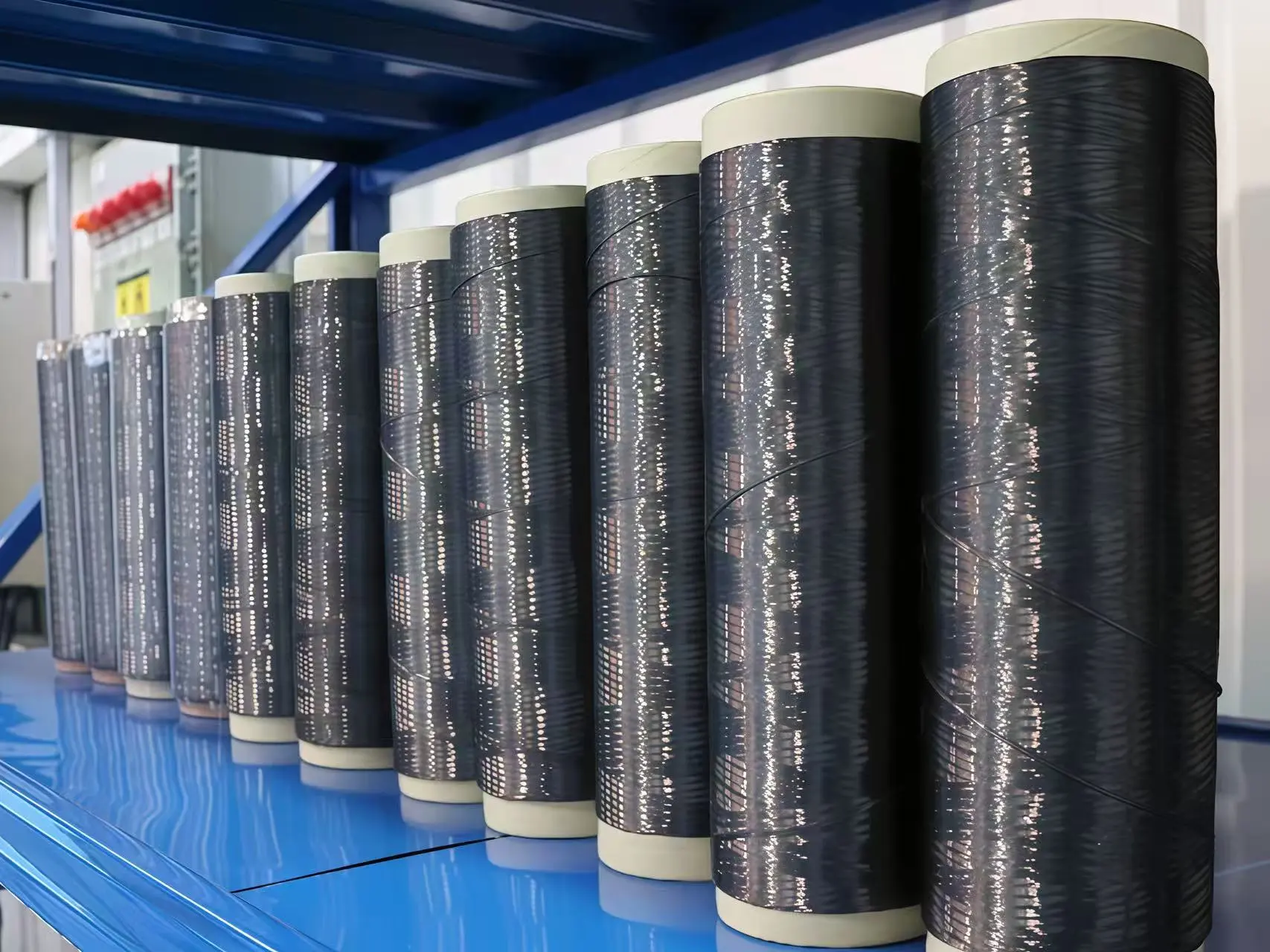
Color-plated spread tow · e.g. OSB CFF80 P/T 20 Silver

Surface metallization keeps the lightweight, high-strength character of spread tow fabric while adding metallic luster effects, described on the page as "black with a hint of silver" and "iridescent gradients".

Buyer decision: approve a visual sample before the roll is woven — appearance is the whole point of this order.

Higher-grade part at fixed mass

M30 and M40 models from 52 g/m² upward

The M30 and M40 grades reach down to 52–63 g/m², so you can stay inside the thin-ply format while moving up the grade ladder.

Buyer decision: weigh the gain from the higher grade against cost and lead time on the specific roll width you need.

Moulded or compounded part

Chopped carbon fiber and carbon fiber powder

When the part is not laminated from woven plies, a discontinuous form is the practical input — and this grade is named for high thermal conductivity.

Buyer decision: agree the loading level and dispersion behaviour with your compounder before ordering volume.

Custom Structure, Bulk Orders and OEM Supply

Fabric structure and other specific specifications can be customized to customer requirements, and every listed fabric is produced at a standard 1000 mm width unless you specify otherwise. For line trials, colour matching or OEM programmes, send the six fields below and we can quote against the exact construction rather than a nearest match.

  • Fiber grade — T300, T700 (12K or 24K), T800 (12K or 24K), M30 or M40
  • Fiber areal weight in g/m² — for example 80 or 100
  • Weave structure — plain, twill or satin
  • Spread tow width in mm — for example 5, 16 or 25
  • Roll width and roll length
  • Color-plated or standard finish, plus any thin-ply requirement

Ready to specify?

Send your construction and volume through the contact page, or review the full model list before you write the request.

Request a Quote Open the Product Page

Related Reading

Three notes to help clarify product requirements before contacting the supplier.

Plain Weave and Twill Weave: How They Differ in Spread Tow Carbon Fabric

Plain and twill weave change how spread tow carbon fabric handles, drapes, and reads on a finished part, so the useful comparison starts at the interlacing pattern.

Read article

Silver Carbon Fiber Fabric for Automotive Interior Trim

An interior trim team narrows silver and silver-black spread tow fabrics by appearance target, tow width, areal weight, weave, and dry-fabric handling before sample review.

Read article

Custom Carbon Fiber Fabric for Prepreg Manufacturing Lines

Custom carbon fiber fabric for prepreg manufacturing lines is matched by width, areal weight, tow width, and weave, with the dry fabric remaining an input to prepreg processing rather than a finished…

Read article

Frequently Asked Questions

What is spread tow carbon fiber fabric?

It is a woven carbon fabric made from tows that are spread into flat tapes before weaving. the product page describes excellent fiber alignment, fewer warp–weft interlacing points, reduced resin accumulation and porosity during prepreg processing, and easy impregnation and laying.

How do i read a model number such as osb cff80 p 5?

Cff stands for carbon fiber fabric, 80 is the fiber areal weight in g/m², p is plain weave (t is twill, s is satin), and 5 is the spread tow width in millimetres. some models list more than one structure, for example osb cff80 p/t/s 20.

What areal weight, thickness and width ranges are available?

The models on the product page run from 52 to 206 g/m² in fiber areal weight and from 0.05 to 0.21 mm in reference thickness, with tow widths from 4 to 25 mm. every fabric listed has a standard width of 1000 mm.

What does the asterisk next to the areal weight mean?

Fabrics marked with an asterisk in the fiber areal weight column are thin-ply featured products. unmarked models are the heavier standard options in the same range.

Which fiber grades are offered?

The tables cover t300-3k, t700-12k, t700-24k, t800-12k, t800-24k, m30 and m40 grades, plus a separate color-plated t700 series in silver and other finishes.

Can the structure be customized, and how do i request a quote?

Yes — the product page states that fabric structure and other specific specifications can be customized to customer requirements. send your fiber grade, areal weight, weave, tow width, roll width and roll length through the contact page and we will quote against that construction.